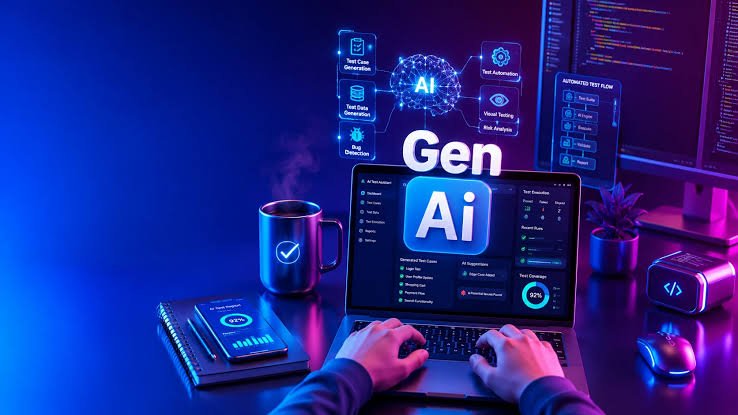

Artificial intelligence reshapes software testing by analyzing requirements, generating targeted test cases, and prioritizing tests by impact and risk. It curates data sets, adapts to changing specifications, and preserves traceability while monitoring model drift to recalibrate strategies. In defect detection, AI enables pixel-precise visual regression and rapid anomaly localization. Integrated with CI/CD, it supports governance, proactive quality metrics, and accountable experimentation. The next steps could redefine confidence and pace, but they require careful orchestration and governance.
What AI-Powered Testing Is (Explainer for Foundation)
AI-powered testing refers to the use of artificial intelligence techniques to enhance, automate, and optimize software testing activities. The approach systematically analyzes requirements, selects relevant test cases, and monitors execution outcomes. It reveals AI testing benefits such as efficiency and coverage while acknowledging AI testing challenges like data quality, bias, and integration complexity. The method remains proactive, empirical, and freedom-minded for teams.
How AI Generates and Prioritizes Tests
The process of generating and prioritizing tests leverages AI to translate requirements and observed behavior into targeted test cases, then ranks them by impact, risk, and coverage gaps.
It systematically curates test data, adapts to evolving specifications, and maintains traceability.
The approach monitors model drift and recalibrates priorities to preserve coverage, efficiency, and proactive risk mitigation.
AI in Defect Detection and Visual Regression
Defect detection and visual regression employ automated analysis to identify discrepancies between expected and actual renderings, enabling rapid pinpointing of anomalies across interfaces and components.
The approach emphasizes defect localization, tracking inconsistencies across states and layouts with pixel-accurate comparisons.
Integrating AI Into Ci/Cd and Quality Metrics
How can AI be embedded into CI/CD pipelines to enhance quality control and measurement? Integrating AI into CI/CD enables proactive quality metrics, continuous validation, and automated governance. Key facets include AI governance, ethics considerations, test data management, and model drift monitoring. This disciplined approach supports traceable decisions, responsible experimentation, and swift remediation while keeping teams aligned with freedom-focused, transparent software delivery practices.
Frequently Asked Questions
How Reliable Are Ai-Generated Test Results in Production?
AI reliability in production remains variable; results require rigorous production validation, continued monitoring, and benchmarking. A detached observer notes that reliability hinges on data quality, model drift checks, test coverage, and incident feedback loops to sustain trust and accuracy.
What Are the Ethical Implications of AI in Testing?
Coincidence reveals that AI in testing raises ethics of transparency and bias mitigation as core concerns; it demands rigorous accountability, verifiable fairness, and proactive governance. The approach is methodical, proactive, detail-oriented, and oriented toward an audience seeking freedom.
Can AI Replace Human Testers Entirely?
AI cannot replace human testers entirely; limitations persist. The approach highlights AI limitations and Testing ethics, emphasizing ongoing collaboration. A methodical, proactive stance recognizes freedom-seeking teams rely on judgement, nuance, and domain experience beyond automated capabilities.
How Do You Measure ROI From AI Testing?
ROI for AI testing is measured via ROI measurement methods that track cost savings, defect reduction, and deployment velocity; production trust factors ensure sustained value. The methodical approach emphasizes proactive data, transparency, and freedom-driven decision support.
What Licensing or Data Privacy Concerns Exist?
Licensing concerns and data privacy are central; the approach is methodical and proactive, outlining contract terms, usage rights, license scope, and vendor audits, while detailing data handling, anonymization, retention, third-party access, and compliance with applicable privacy regulations.
Conclusion
AI-powered testing is shaping software quality with precise, data-driven workflows that align test design, execution, and governance. By forecasting risk, curating data, and delivering rapid defect localization, it transforms CI/CD into a transparent, proactive pipeline. The approach is methodical: continuously monitors drift, recalibrates priorities, and tracks metrics for accountable delivery. In this evolving landscape, AI acts as a steady compass—guiding teams through complexity like a lantern in fog, ensuring reliable software with swift remediation.